AI Explained: The Future for Business

How Artificial Intelligence is Boosting Business Efficiency
Introduction
Artificial intelligence (AI) refers to computer systems that are designed to perform tasks that would otherwise require human intelligence. The concept of AI has existed since the 1950s, but recent advances in computing power, availability of big data, and improvements in machine learning have brought it from science fiction into reality.
In recent years, AI has made major strides and become more mainstream. With the exponential growth of data, improved algorithms, and advancements in computer processing power, AI is now powering many familiar technologies. Digital assistants like Siri, product recommendations on e-commerce sites, facial recognition, and self-driving cars all rely on artificial intelligence. Going forward, AI is poised to transform even more industries through automation and augmentation of human capabilities.
For businesses, AI can provide a competitive advantage by enhancing productivity, customer experience, and decision making. AI-powered tools for marketing automation, predictive analytics, and conversational bots allow small teams to accomplish more with fewer resources. By taking advantage of AI's capabilities, businesses can gain deeper insights, work more efficiently, and exceed customer expectations. With the democratization of AI through cloud services, it is now more accessible than ever for businesses to implement AI and enjoy the benefits. Though adopting new technologies presents challenges, the potential rewards of incorporating AI make it worth consideration for most business owners.
Current AI Capabilities:
Artificial intelligence has advanced significantly in recent years thanks to improvements in machine learning and deep learning techniques. Here are some of the key capabilities of AI today:
Machine Learning and Deep Learning
Machine learning is the foundation for many AI applications today. It involves "training" statistical models using large amounts of data, allowing the models to improve their ability to perform tasks like image recognition, speech-to-text or text-to-video translation, and predicting customer behavior over time. Deep learning is a type of machine learning based on neural networks modeled after the human brain. Deep learning has led to major advances in computer vision and speech recognition.
Natural Language Processing
Natural language processing (NLP) allows AI systems to understand, interpret, and generate human language. NLP powers chatbots, virtual assistants like Alexa and Siri, as well as Google Search. It enables AI to parse documents, classify their intent, translate between languages, and generate text summaries.
Computer Vision
Computer vision enables AI systems to identify, categorize, and understand visual images and videos. It powers image recognition, facial recognition, object detection in self-driving vehicles, automated video surveillance, and more. Computer vision allows AI to sense and comprehend the visual world like humans do.
Speech Recognition
Speech recognition, like that used by virtual assistants, allows AI systems to accurately transcribe human speech into text in real time. It enables effortless dictation, voice commands, and voice search capabilities. Speech recognition relies on machine learning and NLP to constantly improve transcription accuracy.
Robotics
AI advancements are enabling more capable robots with improved computer vision, speech recognition, and learning capabilities. AI robots can perform an expanding variety of manual tasks with greater flexibility, adaptability, and precision than traditional robots. AI robotics is being applied in manufacturing, healthcare, retail, hospitality and many other fields.
AI in Marketing
AI is transforming marketing in several key ways:
Communication
AI tools generate copy for ads, blogs, social media, etc. These tools are also producing videos using human-like “avatars” that provide the voice for AI generated scripts. In addition, AI video editing software is used to change scenery, content and enhance products. AI programs can generate partial or complete websites in minutes. Users inputting their ideas with text, can produce AI generating artwork and posters in seconds. AI is also used to generate complete PowerPoint slide decks, including graphic design, text and images.
Predictive Analytics
AI tools can analyze customer data to identify trends and patterns. This allows marketers to better predict customer needs and preferences. AI-powered predictive analytics helps marketers anticipate what products customers will want before they even know it.
Personalization
AI algorithms learn from customer data to deliver hyper-personalized messaging and product recommendations. AI takes personalization to the next level by tailoring content, offers, pricing and more for each individual customer.
Chatbots
AI-powered chatbots provide instant customer support via messaging apps, websites and more. Chatbots use natural language processing to understand customer questions and provide relevant answers. They can handle common inquiries, freeing up staff for more complex issues.
Social Media Optimization (SEO)
AI analyzes social media data to find the best times to post content. It identifies trending topics relevant to your brand. AI also optimizes ad targeting and budgets across social platforms.
Dynamic Pricing
AI algorithms crunch pricing data to adjust prices based on fluctuating market conditions in real-time. Dynamic pricing enabled by AI allows businesses to optimize prices to maximize profit.
AI in Business Operations
Artificial intelligence is transforming business operations in numerous ways. Some of the key applications of AI for streamlining operations include:
Supply Chain Optimization
AI can analyze massive amounts of supply chain data to optimize logistics networks. Machine learning algorithms can detect patterns and anticipate disruptions. This enables businesses to improve delivery times, reduce costs, and better manage inventory. AI-powered supply chain automation provides real-time visibility into inventory levels, production schedules, and shipment locations.
Inventory Management
AI inventory management systems continuously track inventory levels across multiple locations. Sensors and computer vision can automatically scan shelves and alert when stocks are low. AI helps predict demand more accurately to optimize inventory and reduce waste. It also assists with dynamic pricing and promotion strategies to sell off excess stock.
Demand Forecasting
By processing inputs like past sales data, seasonality patterns and external market factors, AI programs can generate highly accurate demand forecasts. This allows businesses to align supply better with expected demand. AI-based forecasts are more reliable than traditional methods, leading to improved production planning and sales strategies.
Process Automation
Repetitive back-office tasks can be automated using AI bots and virtual agents. This reduces manual work and allows employees to focus on higher-value activities. Routine customer service interactions via chat and email can be handled by AI. It can also automate various finance processes like bookkeeping, reporting and auditing. AI improves efficiency, speed and accuracy across business operations.
AI in Customer Service
Artificial intelligence is revolutionizing customer service for businesses. Intelligent virtual agents powered by natural language processing can understand customer questions and provide instant answers 24/7. This reduces the need for staff to handle simple repetitive inquiries.
Sentiment analysis tools can monitor customer conversations and interactions to identify pain points and areas for improvement. By analyzing emotions and feedback, businesses can tailor services and enhance experiences.
FAQ bots that use machine learning can answer frequently asked questions automatically. The bots continue to improve by learning from customer conversations over time. This provides customers with quick self-service options.
Businesses can leverage AI to offer always-available customer support. With chatbots and virtual agents working around the clock, customers can get assistance anytime without waiting for human agents during business hours. This convenience boosts satisfaction.
By implementing AI in customer service, small businesses can provide prompt and personalized support at scale. The technology enables smaller teams to deliver 24/7 service and stay competitive.
AI in Recruiting
Artificial intelligence is transforming the recruiting process in several key ways:
Resume Screening
AI tools can rapidly scan resumes and job applications to filter out unqualified candidates. This allows recruiters to focus their efforts on the most promising applicants instead of manually reviewing hundreds of resumes. AI resume screening tools use natural language processing to analyze resumes based on keywords, skills, job titles, education, and other relevant criteria. This helps surface the best candidates faster.
Candidate Matching
Once resumes are screened, AI recruitment software can match candidates to open positions they would be a good fit for. The algorithms analyze candidates' skills, experience, interests, location, salary requirements, and other attributes to automatically determine which roles they align with. This makes it easier for recruiters to identify and prioritize reaching out to suitable candidates for available jobs.
Interview Assistance
Some AI recruitment tools can help schedule interviews, provide interview questions, or even conduct an initial video interview with candidates through natural language processing. This frees up recruiter time spent on these tasks. The AI interviews can screen for skills, assess culture fit, and evaluate a candidate's qualifications before determining if they should proceed to an in-person interview. This allows the recruiters to focus on the most promising candidates.
By leveraging these AI capabilities, recruiters can greatly improve the efficiency, accuracy and speed of the hiring process. The automation of tedious tasks like resume screening allows recruiters to spend their time on more strategic hiring initiatives. AI gives them enhanced data to make better hiring decisions resulting in quality hires.
Businesses can level the playing field against larger competitors by taking advantage of these AI recruiting tools.
AI in Finance
Artificial intelligence is transforming the finance industry in several ways. One major application is automated accounting. AI-powered software can automate repetitive tasks like accounts payable and receivable, invoicing, expense reports, and other bookkeeping duties. This frees up finance teams to focus on more strategic initiatives.
Another use case is fraud detection. AI tools can analyze patterns in financial data to detect anomalies that may indicate fraudulent activity. This allows companies to identify issues faster and prevent losses.
AI also enables more accurate financial forecasting. By processing large volumes of data and identifying correlations, AI systems can make predictions about future revenues, expenses, and cash flows. This supports better budgeting and risk management.
Additional finance applications for AI include personalized banking through chatbots, algorithmic trading in financial markets, and credit-risk modeling.
Overall, the finance function is being radically enhanced by artificial intelligence. Companies that embrace these innovations can operate more efficiently and make smarter data-driven decisions. AI in finance offers many benefits in productivity, security, planning, and overall performance.
Challenges of AI Adoption
Integrating AI into business operations can provide tremendous benefits, but it also comes with some key challenges that small businesses should be aware of.
Upfront Costs
The upfront costs of adopting some of the robust AI uses can be prohibitive for small businesses with limited budgets. Acquiring the necessary hardware, software, and tools to implement AI can require significant capital expenditure. There are also ongoing costs for data storage and cloud services.
Data Requirements
AI systems need access to large, high-quality datasets to be trained effectively. Small businesses may not have enough existing data to properly train AI models. Additional data collection and labeling can add time and expenses.
Skill Gaps
Using AI requires specialized technical skills that must be learned (many text and video tutorials are available). Small business owners and existing employees will need AI training and education. For larger companies, data scientists, machine learning engineers, and other AI talent can be difficult and expensive to recruit and retain.
Integration Difficulties
Integrating AI capabilities into existing business systems and processes can be challenging. Customization is often required, along with adjusting workflows and employee roles. There may be compatibility issues and unanticipated costs related to system upgrades and maintenance.
The good news is there are many AI programs that limit these challenges, particularly for small businesses. There are many beneficial AI services offered for free, or with minimum monthly or annual subscription fees. Most are offered with a basic structure that is intuitive, and therefore can be mastered relatively quickly and easily. In addition, many are “stand alone” AI services that do not require integration into existing business systems. For example, AI software can fully design web sites, write copy or scripts and generate fully-animated videos.
The Future of AI
Artificial intelligence is rapidly evolving and its capabilities are becoming more powerful every year. AI systems will continue to get better at prediction, classification, speech recognition and more advanced cognitive skills. Businesses will be able to leverage these improvements through ready-made AI services and platforms. As AI advances, it will find its way into even more business functions. The technology will reduce or replace the need for human input in areas like strategic planning, corporate communications, legal services and more over the next decade.
Therefore, AI will disrupt many industries and business models. It will be critical for businesses to monitor how AI could impact their sector and make plans to take advantage of opportunities and mitigate risks. Being AI-ready will be key to remaining competitive.
There will ethical considerations, with ongoing debate around the appropriate uses of AI and how to prevent unintended consequences. Businesses should stay informed and ensure any AI they implement is deployed ethically.
Yet, the future is bright for benevolent uses of AI that augment human intelligence and creativity. Businesses that understand the technology, and thoughtfully incorporate it, will have major advantages over their competitors. All companies must plan for how AI will transform their business and industry. With foresight and agility, businesses can harness the power of AI to offer better, cheaper and faster delivery of products and services to customers.
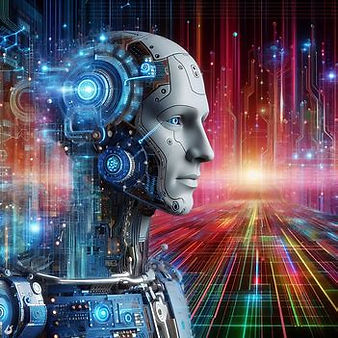
[NOTE: The image and majority content of this blog was generated with AI technology.]
####


Comments